In today's fast-paced digital world, signing documents online has become as common as sending an email. From accepting terms and conditions to finalizing multi-million dollar deals, the act of putting your "signature" on a document often happens with a click or a tap. But what exactly are you using when you do that? And more importantly, are all digital "signatures" created equal?
Many people use "electronic signature" and "digital signature" interchangeably, but these terms refer to distinct technologies with different levels of security and legal implications. Misunderstanding the difference can expose you or your business to unnecessary risks or lead to non-compliance in regulated industries. Let's cut through the confusion and get to the heart of what you need to know.
At a Glance: Key Takeaways
- Electronic Signature (E-Signature): A broad legal term for any electronic indication of agreement. Think typed names, "I agree" buttons, or mouse-drawn signatures. It proves intent to agree.
- Digital Signature: A specific, highly secure type of electronic signature using cryptography. It's like a tamper-evident seal that verifies identity and ensures document integrity.
- Legality: Both can be legally binding, but digital signatures offer superior proof and security, often mandated for high-value or regulated transactions.
- Core Difference: E-signatures confirm intent; digital signatures confirm identity and document integrity.
The Basics: What Exactly Is an Electronic Signature?
Imagine a world where every agreement required a physical pen and paper. Thankfully, that's largely a thing of the past. An electronic signature, or e-signature, is the foundational layer of this digital transformation. It's a broad legal concept defined as any electronic sound, symbol, or process, attached to or logically associated with a record and executed or adopted by a person with the intent to sign the record.
Think of it this way: an e-signature is simply your intent to agree, expressed electronically. It could be as straightforward as:
- Typing your name into a document field.
- Clicking an "I Agree" or "I Accept" button on a website or software installer.
- Drawing your signature with a stylus or finger on a touchscreen device.
- Using a scanned image of your handwritten signature.
The beauty of the electronic signature lies in its simplicity and universal applicability. It removes geographical barriers and speeds up transactions dramatically.
Legal Backing: The Power of Intent
The legal validity of electronic signatures is well-established in many parts of the world. In the United States, the Uniform Electronic Transactions Act (UETA) and the Electronic Signatures in Global and National Commerce (ESIGN) Act provide a clear framework, stating that an electronic signature generally holds the same legal weight as a wet-ink signature, as long as specific conditions are met, primarily demonstrating the signer's intent to sign and associating the signature with the record. Similarly, the European Union's eIDAS Regulation (electronic Identification, Authentication and Trust Services) ensures the legal enforceability of e-signatures across member states.
This robust legal framework means that for most everyday business agreements, an electronic signature is perfectly sufficient and legally binding.
Where Electronic Signatures Shine: Everyday Convenience
Electronic signatures are the workhorses of the digital economy, enabling speed and efficiency across countless scenarios:
- Online Contracts & Agreements: From employment contracts and non-disclosure agreements (NDAs) to sales contracts and rental leases, e-signatures facilitate rapid agreement. Imagine onboarding a new employee in a fraction of the time, regardless of where they are located.
- Accepting Terms and Conditions: Every time you download software, sign up for a new online service, or open a mobile app, you're likely using an e-signature to agree to the platform's terms.
- Internal Approvals: Streamlining internal company workflows, such as approving purchase orders, expense reports, or HR forms, becomes effortless. This cuts down on paper, printing, and manual routing.
- General Business Transactions: Any business process requiring a quick, verifiable agreement where the primary concern is documenting intent and basic legal compliance can leverage e-signatures.
- International Transactions: E-signatures facilitate cross-border business by standardizing the signing process, even if the underlying legal specifics might vary by jurisdiction.
The value here is convenience, speed, and eliminating the friction of physical paperwork, all while maintaining legal validity for a vast majority of common agreements.
Stepping Up Security: Decoding Digital Signatures
While an electronic signature simply confirms intent, a digital signature takes things to a whole new level by adding ironclad security, identity verification, and proof of document integrity. It's not just an electronic mark; it's a sophisticated cryptographic process.
Think of a digital signature as a highly secure, tamper-evident seal for your document. It uses complex mathematical algorithms and encryption to create a unique "fingerprint" of the document. This fingerprint, along with your verified identity, gets securely attached to the document.
How Does a Digital Signature Work (Simplified)?
- Hashing: When you digitally sign a document, the software first creates a unique "hash" – a fixed-length string of characters – from the document's content. Even a tiny change to the document would result in a completely different hash. This is like creating a unique numerical summary of the document.
- Encryption with Private Key: The signer's unique private key (a secret code known only to them) then encrypts this hash.
- Digital Certificate: This encrypted hash is bundled with the signer's digital certificate. This certificate is like a digital ID card, issued by a trusted third-party organization called a Certificate Authority (CA). The CA verifies your identity (like a digital notary public) and binds your public key to it.
- Verification with Public Key: When someone receives the digitally signed document, their software uses your corresponding public key (which is openly available and part of your digital certificate) to decrypt the hash. It then independently generates a new hash of the received document.
- Match for Integrity: If the decrypted hash from your signature matches the newly generated hash of the document, it confirms two critical things:
- Authentication: The signature truly came from you (or rather, the holder of your private key).
- Integrity: The document has not been altered since it was signed.
If there's any discrepancy, the signature is invalidated, and the recipient is alerted to potential tampering.
The Pillars of Digital Signature Security
Digital signatures are built on three fundamental security features that make them essential for high-stakes transactions:
- Integrity: "No Tampering Allowed"
- This is perhaps the most defining feature. A digital signature guarantees that the document has not been changed or tampered with after it was signed. If even a single comma is altered, the cryptographic link breaks, and the signature will show as invalid. This provides an indisputable audit trail.
- Authentication: "Who Signed This?"
- Digital signatures rigorously verify the identity of the signer. Because they rely on digital certificates issued by trusted CAs after identity verification, you can be confident who signed the document. This prevents impersonation and ensures that the signature truly belongs to the individual or entity it claims to.
- Non-Repudiation: "You Signed It, You Own It"
- This is the strongest form of proof. Non-repudiation means the signer cannot legitimately deny signing the document. Since their unique private key was required to create the signature, and that key is linked to their verified identity, denying the signature becomes virtually impossible. This is critical in legal disputes.
Where Digital Signatures Are Non-Negotiable: High-Stakes and Regulation
Given their enhanced security features, digital signatures are indispensable in scenarios where trust, proof of identity, and document integrity are paramount:
- Secure Financial Transactions: Authorizing large loans, insurance policies, mortgages, or other high-value financial agreements requires the unassailable proof and security only digital signatures can provide.
- Legal Contracts Requiring High Security: While e-signatures are often sufficient for basic contracts, critical legal documents (e.g., real estate transactions, complex corporate mergers) benefit from the integrity and non-repudiation of digital signatures.
- Sensitive Government Documents: Issuing or submitting government forms, tax documents, birth certificates, passports, or other official records often mandates digital signatures to prevent fraud and ensure authenticity.
- Medical Prescriptions and Records: Healthcare, governed by strict regulations like HIPAA in the US, frequently requires digital signatures to protect patient data, authenticate prescriptions, and ensure the integrity of medical records.
- Highly Regulated Industries: Finance, pharmaceuticals, and other sectors with stringent compliance requirements (e.g., Sarbanes-Oxley, GLBA) often specify digital signatures to meet their audit and security standards.
- eGovernment Initiatives: Many government agencies globally are moving towards fully digital processes, with digital signatures forming the backbone of secure citizen interactions.
In these environments, the added layer of cryptographic security isn't just a nice-to-have; it's a regulatory and operational necessity.
The 6 Core Differences: A Side-by-Side Clarity
While both electronic and digital signatures aim to streamline agreements, understanding their fundamental distinctions is crucial for making informed decisions. Here’s a breakdown of their key differences:
1. Purpose: Intent vs. Security
- Electronic Signature: Its primary purpose is to capture and demonstrate the signer's intent to agree to the terms of a document, making the agreement legally binding. It's about getting an affirmative "yes" in an electronic format.
- Digital Signature: While also showing intent, its core purpose is to secure the document itself. It focuses on ensuring the document's integrity (that it hasn't been altered post-signing) and verifying the authenticity of the signer's identity through cryptographic means.
2. Security Levels: Basic vs. Cryptographic Fortification
- Electronic Signature: Offers basic security features. This might include recording an IP address, timestamping the signature, using email verification, or simple two-factor authentication (2FA). While these add layers of proof, they don't prevent sophisticated tampering of the document's content.
- Digital Signature: Provides a substantially higher level of security. It uses advanced cryptographic methods, including public key infrastructure (PKI) and hashing algorithms, along with digital certificates, to create a robust, unforgeable, and tamper-evident signature.
3. Authentication Methods: Varied Verification vs. CA-Issued Certificates
- Electronic Signature: Relies on various methods to link the signer to the signature. This could be as simple as logging into a secure system, email verification (e.g., a link sent to your inbox), or more advanced 2FA (like a code sent to your phone). The level of identity assurance can vary significantly.
- Digital Signature: Employs a rigorous authentication process using digital certificates issued by trusted third-party Certificate Authorities (CAs). These CAs perform identity verification checks (which can range from basic email verification to in-person identity proofing, depending on the certificate type) before issuing a certificate that binds the signer's identity to their unique cryptographic keys.
4. Integrity Verification: Lacking vs. Built-in Tamper Detection
- Electronic Signature: Generally lacks inherent, built-in mechanisms to detect if the document has been altered after the signature was applied. If someone changes the content of an e-signed PDF, for example, the e-signature itself won't automatically flag the change as invalid.
- Digital Signature: Incorporates a unique cryptographic hash of the document's content at the time of signing. If any part of the document is changed post-signing, the hash will no longer match, and the digital signature will display as invalid or tampered with. This provides an instant, undeniable alert to any alterations.
5. Non-Repudiation: Variable vs. Undeniable Proof
- Electronic Signature: The level of non-repudiation (the ability to prove that the signer cannot deny their signature) can vary greatly depending on the underlying authentication and audit trail mechanisms used by the e-signature platform. Simple e-signatures might be easier to dispute in court.
- Digital Signature: Offers strong non-repudiation. Since the signature is created using the signer's unique private key, which is linked to their verified identity through a CA-issued certificate, it is extremely difficult for the signer to credibly deny that they signed the document.
6. Creation: Human Action vs. Software Generation
- Electronic Signature: Is directly created by an individual's action – typing, clicking, drawing, or uploading a scanned image. The human element is very direct.
- Digital Signature: Is generated by specialized software using cryptographic methods. The user initiates the signing process, but the software performs the complex cryptographic operations (hashing, encryption with private key, binding the certificate) to create the signature. The user's identity is verified and bound to a digital certificate, but the signature itself is a product of this software process.
Legal Landscape: Why Compliance Matters
Both electronic and digital signatures are legally recognized in many jurisdictions, but their specific requirements and implications can vary significantly. The key is not just whether a signature is "legal," but whether it meets the specific legal and regulatory standards for a given document or industry.
- The U.S. Perspective (UETA & ESIGN Act): In the United States, the Uniform Electronic Transactions Act (UETA) and the ESIGN Act established the foundational principle that electronic signatures generally have the same legal effect as traditional handwritten signatures. This means that a typed name, a click-wrap agreement, or a drawn signature can be legally binding, provided there's clear intent to sign and an association with the record. They prioritize the intent of the signer.
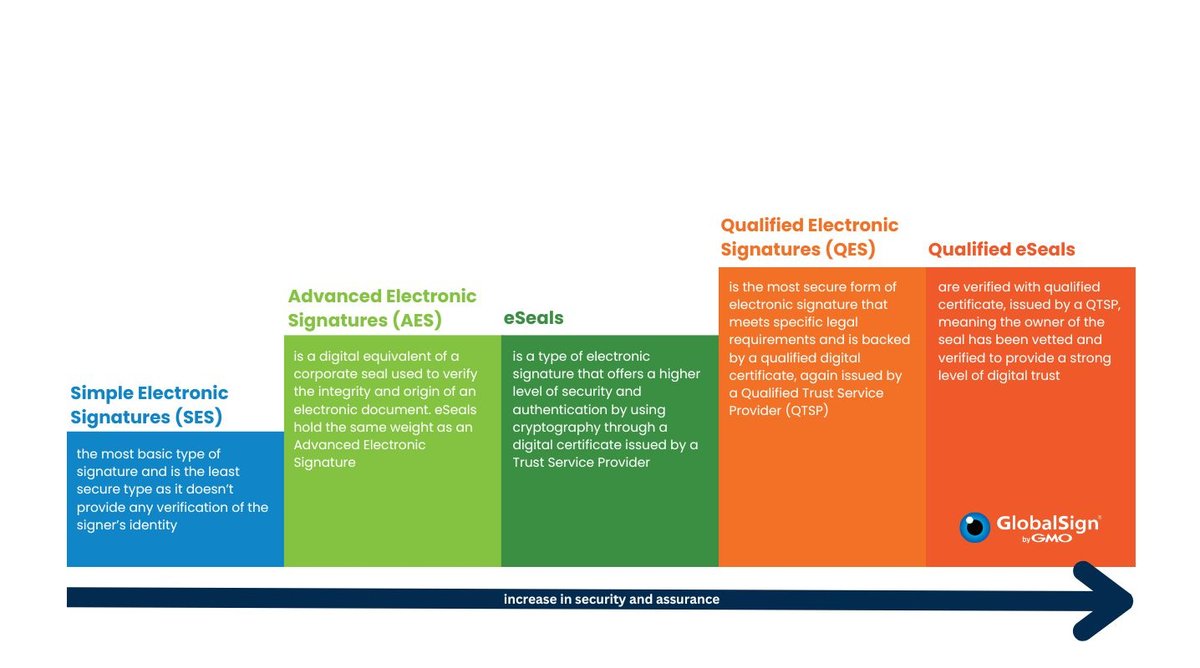
- The EU Perspective (eIDAS Regulation): In the European Union, the eIDAS Regulation provides a tiered approach to electronic signatures:
- Standard Electronic Signatures: Broadly equivalent to UETA/ESIGN, legally recognized but with varying evidential weight.
- Advanced Electronic Signatures (AES): Uniquely linked to the signer, capable of identifying the signer, created using data the signer can use under their sole control, and linked to the data signed in such a way that any subsequent alteration of the data is detectable.
- Qualified Electronic Signatures (QES): An AES that is created by a qualified electronic signature creation device and is based on a qualified certificate for electronic signatures. This offers the highest level of security and legal equivalence to a handwritten signature. Digital signatures often fall into the AES or QES categories, offering superior evidential weight.
Industry-Specific Mandates
While general laws provide a broad framework, many industries have specific compliance requirements that dictate the type of signature needed:
- Healthcare (e.g., HIPAA in the US): Requires robust authentication and integrity controls for patient records and prescriptions, often necessitating digital signatures or advanced e-signature solutions.
- Financial Services (e.g., GLBA, SOX): Demands strong audit trails, identity verification, and non-repudiation for financial transactions and reporting, frequently requiring digital signatures for critical documents.
- Government & Legal: Many government agencies and legal bodies specify the use of digital signatures for certain filings, permits, or official documents to ensure authenticity and prevent fraud.
Understanding your local regulations and industry-specific compliance standards is not just good practice—it's absolutely crucial. What works for a simple internal HR form might be insufficient for a major real estate contract or a healthcare provider's patient consent form.
Choosing Your Signature Solution: A Practical Guide
Now that you understand the distinctions, how do you decide which solution is right for you or your business? It's not about one being inherently "better" than the other, but about choosing the appropriate tool for the job.
1. Assess Your Security Requirements: Match the Solution to the Risk
- Low to Medium Risk Documents: For internal approvals, simple service agreements, basic consent forms, or general terms and conditions, a standard electronic signature solution is typically sufficient. The focus here is on convenience, speed, and establishing intent.
- High-Risk, High-Value, or Regulated Documents: If you're dealing with financial transactions, sensitive personal data (like medical records), critical legal contracts, government filings, or anything in a highly regulated industry, a digital signature solution is almost always the safer and often legally mandated choice. These scenarios demand verified identity, document integrity, and strong non-repudiation.
2. Prioritize Ease of Use: Adoption is Key
- For Signers: A signature solution won't be effective if people don't use it. Look for platforms that offer an intuitive, user-friendly experience for all parties involved, regardless of their technical proficiency. This includes clear signing flows, mobile compatibility, and minimal setup hurdles. The smoother the process, the higher the adoption rate.
- For Administrators: The platform should be easy to manage for your team, with features for document tracking, audit trails, template creation, and integration with your existing business systems (CRM, ERP, HRIS).
3. Evaluate the Cost: Beyond the Sticker Price
- Pricing Models: Signature solutions come with various pricing structures—per user, per document, per transaction, or tiered plans. Calculate what makes the most sense for your expected volume and user base.
- Hidden Costs: Consider potential costs for integrations, advanced features (like bulk sending or custom branding), compliance add-ons, and technical support. A cheaper solution upfront might become more expensive if it lacks essential features or requires extensive customization.
- Return on Investment (ROI): Don't just look at the cost, but also the savings. How much time and money will you save by eliminating printing, scanning, mailing, and manual tracking? How will faster turnaround times impact your business operations and customer satisfaction?
4. Ensure Business Fit: Integrations, Features, and Scalability
- Integrations: Does the signature platform integrate seamlessly with your existing software ecosystem? For example, integration with document management systems, cloud storage (Google Drive, Dropbox), and communication platforms can drastically improve workflow efficiency.
- Specific Features: Do you need advanced features like form fields, automated workflows, conditional logic, bulk signing, or multi-party signing? Ensure the solution offers what you need, not just a generic signing tool.
- Compliance Certifications: If you're in a regulated industry, verify that the provider adheres to relevant standards (e.g., ISO 27001, SOC 2, HIPAA, GDPR, eIDAS-compliance).
- Scalability: Choose a solution that can grow with your business. Will it handle increasing document volumes, more users, and expanding international operations without performance issues or excessive cost increases?
Many solutions today offer both electronic and digital signature capabilities within the same platform, allowing you to choose the appropriate security level on a document-by-document basis. This flexibility provides the best of both worlds, ensuring you're compliant and secure without unnecessary friction. For those looking to streamline their online signing processes, it's worth exploring how you can generate your signature online using modern, versatile tools.
Pitfalls to Avoid
- Under-securing Critical Documents: Using a basic e-signature for a document that truly requires digital signature integrity can lead to legal vulnerabilities or non-compliance.
- Over-securing Trivial Documents: Requiring a full digital signature for every internal memo can create unnecessary friction and slow down simple workflows.
- Ignoring Audit Trails: Even with e-signatures, a robust audit trail (recording IP addresses, timestamps, authentication methods) is crucial for proving the signature's validity. Ensure your chosen platform provides this.
- Assuming Global Uniformity: While UETA and eIDAS are widespread, specific legal interpretations and local laws can vary. Always confirm compliance for cross-border transactions.
Common Questions & Misconceptions
Let's clear up some frequently asked questions and common misunderstandings about electronic and digital signatures.
"Is an electronic signature really legal?"
Absolutely, yes. In most developed countries, laws like the UETA and ESIGN Act in the US, and the eIDAS Regulation in the EU, explicitly grant electronic signatures the same legal validity as handwritten signatures, provided they meet certain criteria (intent to sign, association with the record). The legal framework for e-signatures is robust and has been tested in courts.
"Can an electronic signature be forged?"
Any signature, whether wet-ink or electronic, can potentially be forged. However, good electronic signature solutions include features like IP logging, timestamps, and multi-factor authentication to create a strong audit trail that makes forgery much harder to execute and significantly easier to detect and dispute than a simple handwritten scrawl. Digital signatures, with their cryptographic foundations, are virtually impossible to forge without detection, as any tampering invalidates the signature.
"Do I always need a digital signature?"
No. While digital signatures offer superior security, they are not always necessary. For many common business transactions, internal documents, and everyday agreements, a standard electronic signature is perfectly sufficient and legally binding. You typically need a digital signature when dealing with highly sensitive data, high-value transactions, or when operating in heavily regulated industries that mandate the highest levels of identity verification and document integrity.
"What is a Certificate Authority (CA)?"
A Certificate Authority (CA) is a trusted third-party organization that issues digital certificates. Think of them as digital notaries public. When you get a digital certificate (which is essential for a digital signature), the CA verifies your identity using various checks and then cryptographically binds your identity to your public key. This chain of trust ensures that when someone receives a document digitally signed with a CA-issued certificate, they can trust that the signer's identity has been verified.
"Are electronic signatures and digital signatures just different names for the same thing?"
No, this is the biggest misconception. As we've clarified, an electronic signature is a broad legal term for any electronic agreement. A digital signature is a specific type of electronic signature that uses advanced cryptographic technology to offer superior security, identity verification, and document integrity. All digital signatures are electronic signatures, but not all electronic signatures are digital signatures. It's like how all squares are rectangles, but not all rectangles are squares.
Signing Off with Confidence: Your Next Steps
Navigating the world of online signatures doesn't have to be a maze. By understanding the fundamental differences between electronic and digital signatures, you're now equipped to make informed decisions that protect your business, ensure compliance, and streamline your operations.
The choice between an electronic and a digital signature boils down to a clear assessment of your needs:
- If speed, convenience, and basic legal compliance are your primary drivers for everyday agreements, electronic signatures are your go-to.
- If ironclad security, undeniable identity verification, and guaranteed document integrity are paramount for high-stakes or regulated transactions, then digital signatures are indispensable.
Many modern signing platforms offer both capabilities, allowing you the flexibility to apply the right level of security to each document. Investigate different providers, compare their features, security protocols, and compliance certifications, and choose a solution that aligns perfectly with your specific business context.
The digital age demands agility and security in equal measure. By understanding and strategically implementing the right signature solutions, you can sign off on your agreements with confidence, knowing you've chosen a path that's both efficient and secure.